



ARIEL, UNU-IIGH, and World’s Youth Climate Justice organised a Symposium in Bangkok from 10 to 11 February 2026. This symposium examined the ICJ AO on climate change and the liability of States for harm resulting from failure to take action to address it. The Symposium highlighted the significance of the world’s youth in the campaign that led to the International Court of Justice’s Advisory Opinion on climate change. The ICJ AO marking a historic clarification of states’ legal obligations and the human rights impacts of climate inaction. The Symposium issued a statement addressing some of the key issues emerging during the discussions.
The Symposium affirmed?
1. The ICJ AO is a normative reference that must inform concrete decision-making at regional, national, and local levels.
2. Implementation by States and other stakeholders requires the translation of the ICJ AO into institutional practices, regulatory standards, effective accountability mechanisms, remedies and reparations.
3. Affirm that the right to a safe, clean, healthy, and sustainable environment, together with intergenerational equity, must guide legislative and regulatory reform and inform judicial interpretation
4. Climate-related harm is inseparable from public health impacts, planetary boundaries, and social inequities, posing threats to human health and human security.
5. Actions on loss and damage for climate-related harm are necessary, critically examining development financing models that perpetuate climate injustice.
6. Climate governance must be approached through the systemic integration of environmental and human rights law, public health frameworks, and best available science.
7. Regional approaches must evolve toward rights-based, and accountability-oriented frameworks, consistent with the ICJ AO.
International Court of Justice - Advisory Opinion on climate change and State liability



Developing a Regional Framework
on Environmental Rights in ASEAN
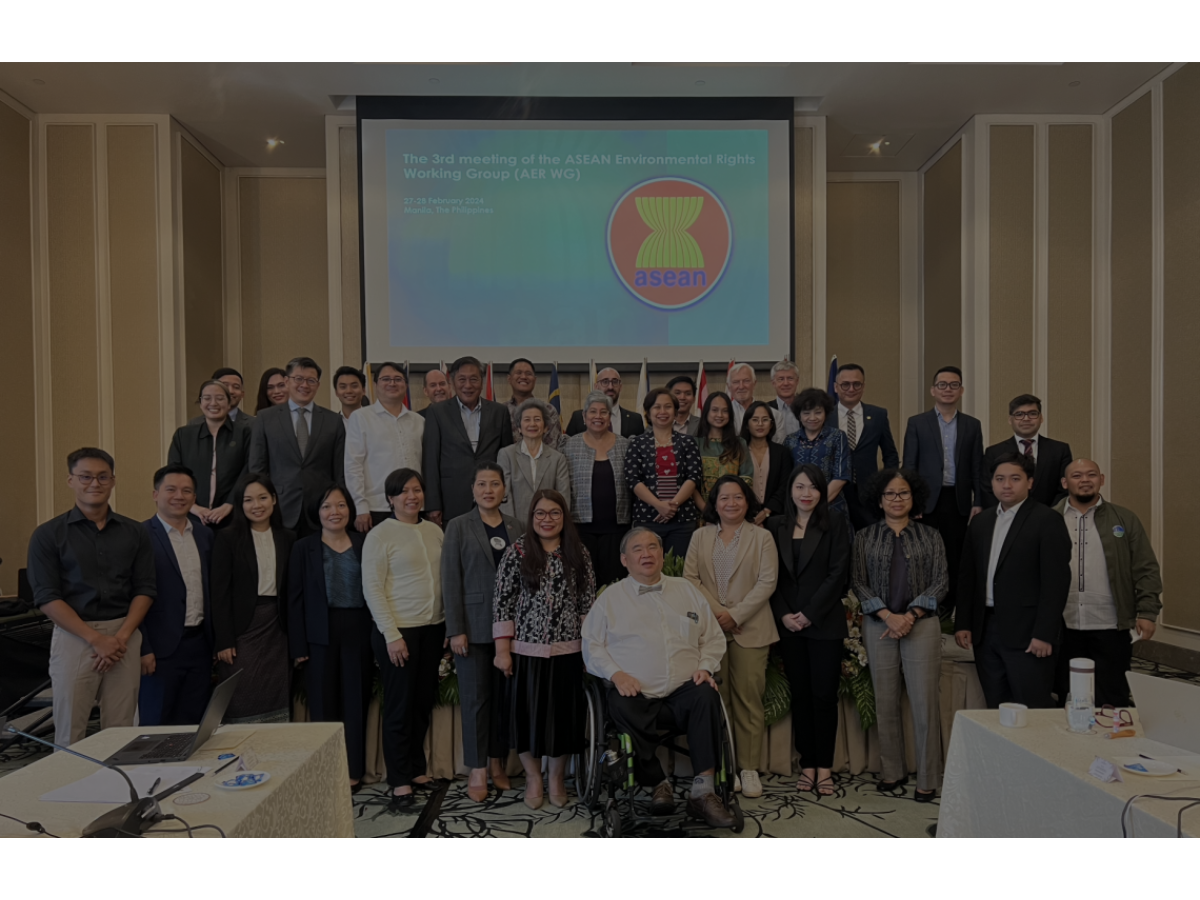
The Ad Hoc Preparatory Session of the ASEAN Environmental Rights Framework and the Interim Working Group (IWG) Meeting took place on 22–23 November 2022 in Bangkok, leading to the adoption of the Terms of Reference of the ASEAN Environmental Rights Working Group (AER Working Group) by AICHR in early 2023. The AER Working Group was tasked with developing a regional framework on environmental rights, which later informed the ASEAN Declaration on the Right to a Safe, Clean, Healthy and Sustainable Environment, now formally adopted by ASEAN leaders.
As one of the civil society organizations involved in this process, ARIEL contributed legal expertise, research, and civil society perspectives to the Working Group’s discussions, helping shape the substance and direction of the final declaration. The AER Working Group—chaired by H.E. Professor Amara Pongsapich and composed of representatives from AICHR, ASEAN Sectoral Bodies, civil society organizations, and experts—will continue refining the regional framework for consideration by relevant ASEAN bodies.
With the declaration now adopted, ARIEL remains committed to supporting its implementation and advancing environmental rights across the region.
Recent Events
Press Release: On ASEAN Declaration on the Rights to Clean, Safe and Sustainable Environment
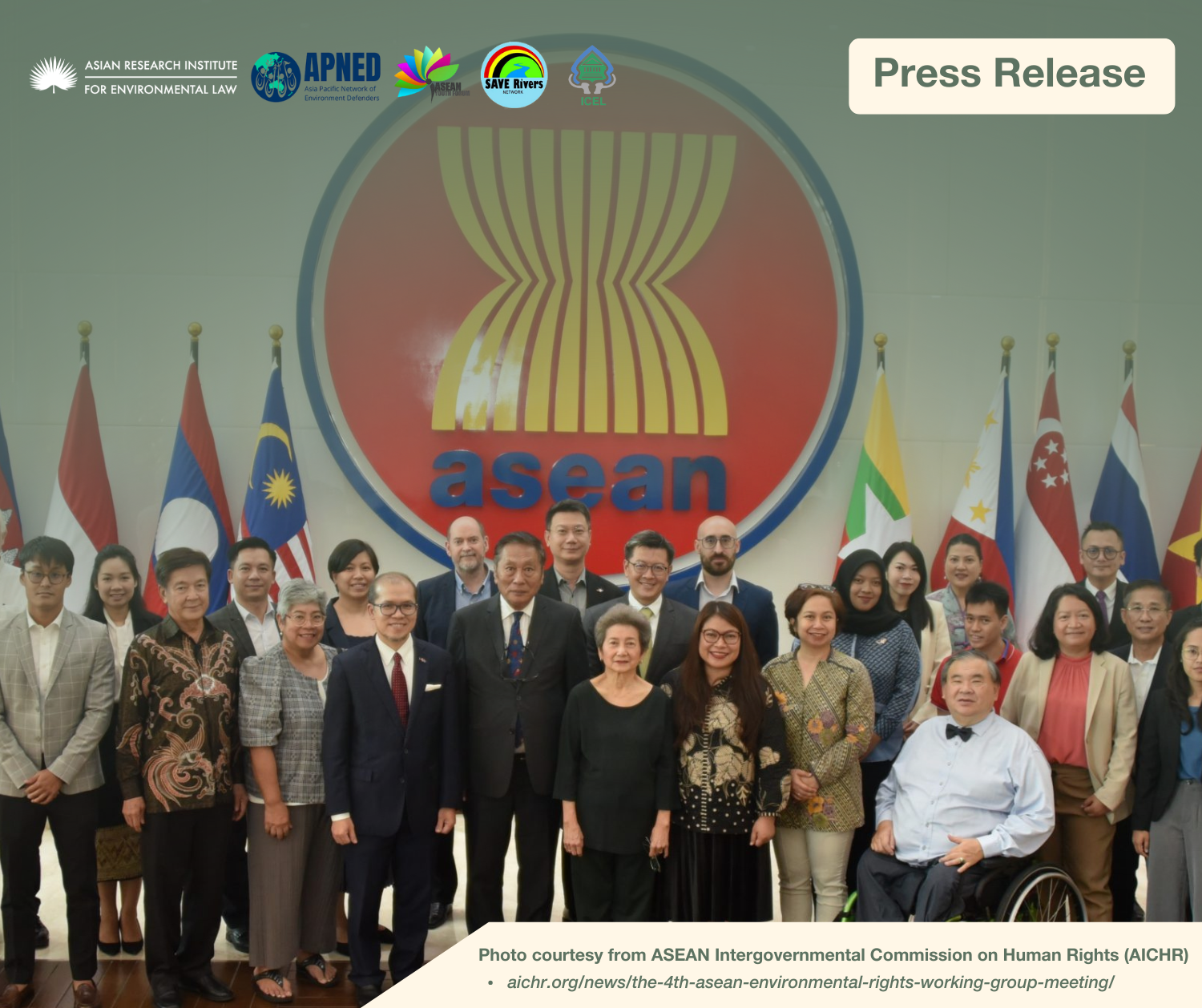
As one of the civil society organizations contributing to the development of the ASEAN Declaration on Environmental Rights, ARIEL provided research, legal expertise, and regional advocacy to ensure people-centered and rights-based principles were reflected in the final text. Explore our contributions and ongoing work to support its implementation.
Seeds of Justice: From Busan to Geneva - The Roads Towards a Plastic Treaty

From Busan to Geneva, Global Plastics Treaty negotiations continue at INC-5.2. In this special Seeds of Justice episode, ARIEL’s Rocky Guzman speaks with Salisa Traipipitsiriwat of EJF Thailand at Palais des Nations, discussing progress, challenges, ASEAN’s role, and civil society’s push for a stronger plastics treaty.
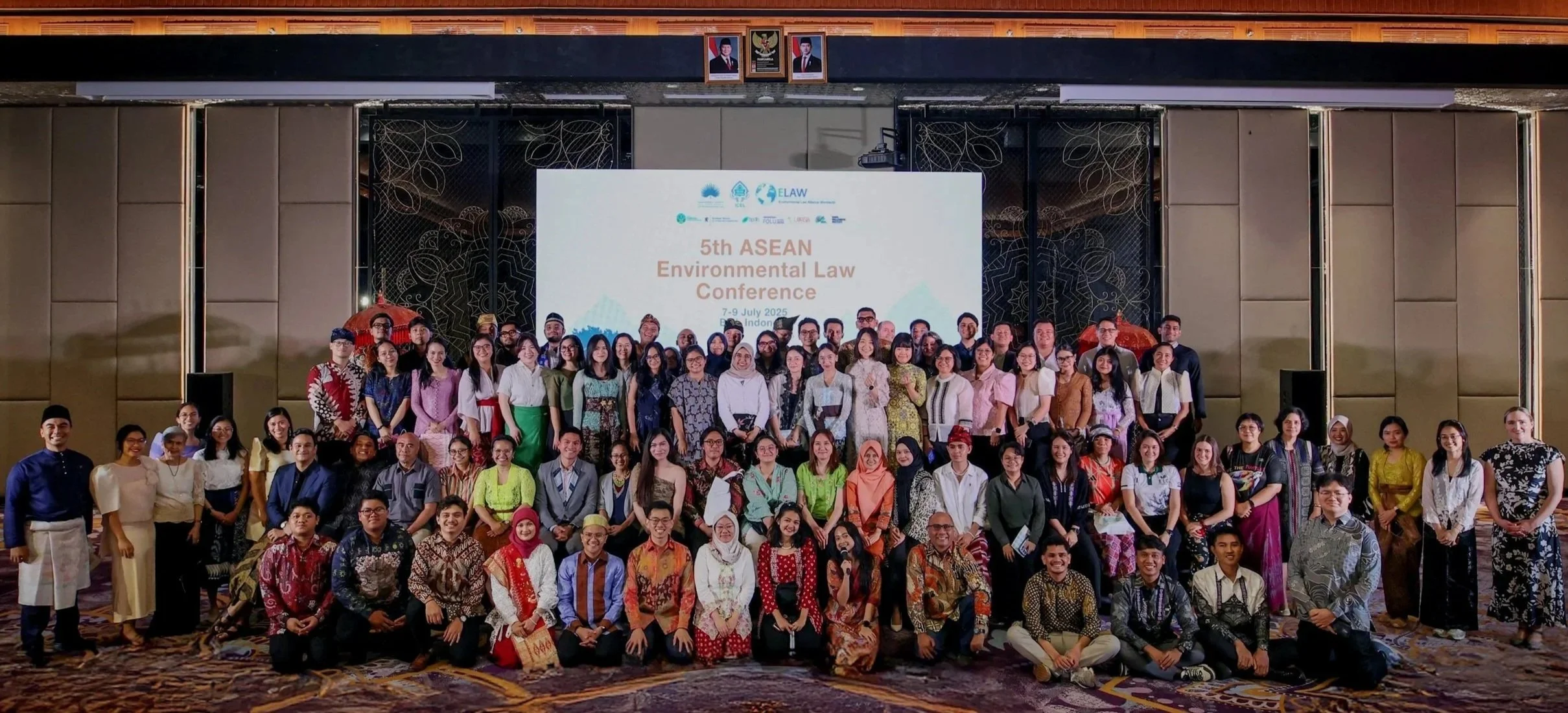
5th ASEAN Environmental Law Conference
The 5th ASEAN Environmental Law Conference in Bali gathered regional experts under the theme “Advancing Regional Commitments for Environmental Justice.” Sessions covered oceans, forests, biodiversity, plastic pollution, and rights of defenders and indigenous peoples.
Tune In To Our Podcast Sessions
We hope to share inspiring stories as told by environmental law champions, activists and leaders from across the region and beyond.